
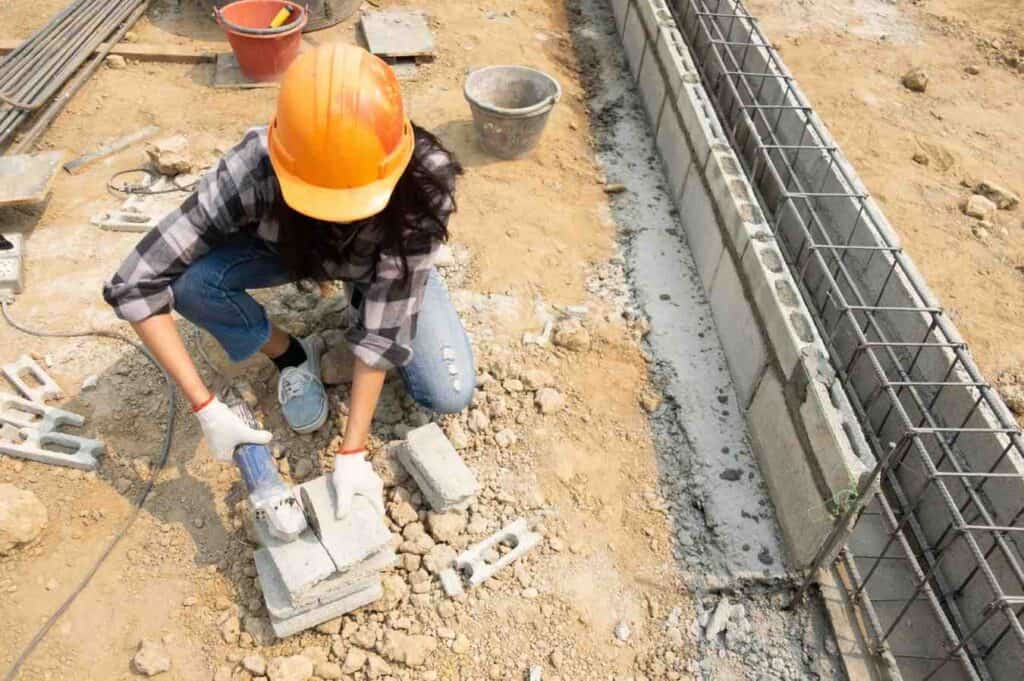
Mass concrete underpinning is a traditional foundation strengthening method where small sections beneath an existing foundation are excavated and filled with concrete. It helps increase foundation depth, improve load support and stabilise buildings affected by subsidence, weak ground, or structural movement.
Table of Contents
ToggleIntroduction
Mass concrete underpinning is one of the most established methods used to strengthen existing foundations. It is commonly used when a building shows signs of movement, settlement, subsidence, or foundation weakness. In simple terms, it involves digging beneath the existing foundation in controlled sections and filling those sections with concrete to create a deeper and stronger foundation.
This method has been used for many years across domestic, commercial, and structural repair projects. While modern underpinning methods such as mini-piling and resin injection are also available, mass concrete underpinning is still widely used where ground conditions, building type, and access make it suitable.
The idea sounds simple: dig below the old foundation and pour in concrete. Naturally, because humans enjoy making simple things risky, the actual process needs careful structural design, professional supervision, and proper sequencing. Done correctly, it can provide reliable support. Done badly, it can cause serious damage to the property.
This guide explains what mass concrete underpinning is, how it works, when it is needed, its benefits, limitations, and what homeowners should know before considering it.
Mass Concrete Underpinning
Mass concrete underpinning is a construction technique used to strengthen or deepen an existing foundation. It is carried out by excavating small sections, also called bays or pins, beneath the current foundation and filling them with concrete.
Once the concrete cures, it forms a new supporting base below the original foundation. This helps transfer the load of the building to deeper, stronger ground.
The process is usually completed in stages. Contractors do not excavate the full length of the foundation at once because that could leave the structure unsupported. Instead, they work on short sections in a controlled sequence, allowing each concrete section to gain strength before moving to the next area.
Mass concrete underpinning is often used for buildings with shallow foundations, older properties, homes affected by subsidence, and structures where the existing foundation can no longer safely support the load.
Why Is It Called Mass Concrete Underpinning?
It is called mass concrete underpinning because the method relies on large volumes of plain concrete to form the new foundation support. Unlike reinforced concrete systems, mass concrete usually depends mainly on its own weight, depth, and compressive strength.
The word “underpinning” means strengthening from below. So, mass concrete underpinning literally means strengthening an existing foundation from underneath using concrete.
It is sometimes called traditional underpinning or pit underpinning because the work involves digging pits beneath the existing foundation in sections.
How Does Mass Concrete Underpinning Work?
Mass concrete underpinning works by extending the existing foundation downwards until it reaches a more stable layer of ground. This helps the building sit on stronger soil and reduces the risk of further movement.
The general process includes:
- Inspecting the building and existing foundation
- Digging trial holes to understand foundation depth and soil conditions
- Preparing a structural engineer’s design
- Excavating small sections beneath the foundation
- Pouring concrete into each section
- Allowing the concrete to cure properly
- Packing the gap beneath the old foundation
- Repeating the process in a planned sequence
The key is controlled excavation. Each bay must be dug to the correct depth and size. The building’s load must remain supported while the work is being done. This is why underpinning should never be treated as casual building work. It is structural work, not a weekend DIY experiment with a shovel and misplaced confidence.
When Is Mass Concrete Underpinning Needed?
Mass concrete underpinning may be needed when a property’s foundation is no longer stable or strong enough. This can happen for several reasons.
One of the most common reasons is subsidence. Subsidence occurs when the ground beneath a building moves, shrinks, or becomes unable to support the foundation properly. This can cause cracks, uneven floors, and movement in walls.
It may also be needed when the original foundation was too shallow, poorly built, or unsuitable for the ground conditions. Many older UK properties were built with shallow foundations, especially compared with modern construction standards.
Mass concrete underpinning may also be considered when:
- A building has visible structural cracks
- Doors and windows are sticking due to movement
- Floors are sloping or uneven
- The property is being extended upwards
- A basement is being created or deepened
- Nearby excavation has affected the ground support
- Soil conditions have changed
- Tree roots have caused ground movement
- Water leaks have washed away or softened the soil
Not every crack means a house needs underpinning, obviously. Buildings move slightly over time because, apparently, even bricks have drama. A proper structural assessment is needed before deciding on underpinning.
Common Signs a Property May Need Underpinning
Homeowners often notice warning signs before underpinning is recommended. These signs do not always confirm foundation failure, but they do suggest that professional investigation may be needed.
Common signs include:
- Cracks wider than normal hairline cracks
- Diagonal cracks around doors and windows
- Cracks that keep growing over time
- Doors or windows are becoming difficult to open
- Gaps between walls, ceilings, or floors
- Uneven or sloping floors
- External brickwork cracks
- Movement around extensions
- Separation between the old and new parts of the property
The important point is movement over time. A single small crack may not be serious. A crack that keeps widening or appears alongside other symptoms deserves attention.
Why Mass Concrete Underpinning Is Used
Mass concrete underpinning is used because it can provide strong and direct support beneath existing foundations. It is especially useful where deeper soil offers better bearing capacity.
It can also be suitable where access is limited. Since work is completed in small sections, it can often be used around existing buildings without needing large machinery.
Another reason it remains popular is its simplicity. The method is well understood by structural engineers, building control officers, and experienced contractors. That does not make it easy, but it does make it reliable when designed and installed properly.
Mass concrete underpinning can help:
- Stabilise existing foundations
- Reduce further structural movement
- Transfer loads to stronger ground
- Support renovation or basement work
- Improve foundation depth
- Strengthen older buildings
Specialist contractors such as Southern Foundations & Pilings may assess whether this method is suitable based on soil type, structural condition, and site access.
The Mass Concrete Underpinning Process
The process usually begins with a structural survey. A structural engineer or suitably qualified professional will inspect the property, review cracks or movement, and decide whether underpinning is necessary.
Trial holes are often dug next to the existing foundation. These allow the engineer to see the foundation depth, width, and condition. Soil conditions are also reviewed because the new foundation must reach suitable bearing ground.
Once the design is prepared, the contractor works in a planned sequence. The foundation is divided into sections. One section is excavated, inspected, and filled with concrete. After the concrete has cured, the gap between the new concrete and the old foundation is packed tightly with a strong mortar mix.
This packing is important because simply pouring concrete into the pit may leave a small gap. If the old foundation is not properly supported, the underpinning will not perform correctly.
The contractor then moves to the next approved section. The work continues until the required length of foundation has been underpinned.
Why Underpinning Must Be Done in Sections
Underpinning must be done in sections because excavating too much at once can remove support from the building. That can cause cracking, movement, or even collapse.
Each section is carefully planned so the structure remains stable throughout the work. The size, depth, and sequence of the bays are usually specified by the engineer.
For example, contractors may work on alternate sections first, then return to complete the remaining sections after the first ones have cured. This staged method reduces the risk of undermining the building.
This is one of the main reasons underpinning the need for professional control. The sequence is not guesswork. The building must remain supported at every stage.
Benefits of Mass Concrete Underpinning
Mass concrete underpinning has several benefits when used in the right situation.
The biggest benefit is strength. Concrete provides a solid and durable support beneath the existing foundation. Once cured and properly packed, it can help stabilise the structure for the long term.
It is also a proven method. Many older properties and domestic buildings have been strengthened using this approach. Because it is widely understood, engineers and building control teams are familiar with how it should be designed and inspected.
Another benefit is that it can be completed with relatively simple equipment compared with piling systems. This can make it suitable for restricted spaces where large machines cannot easily access the site.
Key benefits include:
- Strong foundation support
- Suitable for many older properties
- Proven and traditional method
- Useful for shallow foundation problems
- Can work in restricted access areas
- Helps control structural movement
- Often suitable for domestic underpinning projects
Limitations of Mass Concrete Underpinning
Mass concrete underpinning is not suitable for every property. It can be labour-intensive, disruptive, and slower than some modern alternatives.
It also may not be ideal where very deep, unstable ground is present. If suitable bearing soil is far below the existing foundation, mini-piling or another specialist method may be more appropriate.
The process involves excavation, which means there are safety risks if it is not carried out correctly. Water, loose soil, nearby structures, and poor access can all make the work more complicated.
Mass concrete underpinning can also be disruptive inside or outside the property, depending on where the affected foundations are located.
Limitations may include:
- More excavation than some modern methods
- Not suitable for all soil conditions
- Can be slow and labour-intensive
- Requires careful structural design
- May cause disruption to the property
- Needs building control approval in many cases
In other words, it is effective, but not magical. Concrete has many talents, but reading the ground conditions by itself is sadly not one of them.
Is Mass Concrete Underpinning Safe?
Mass concrete underpinning is safe when designed by a qualified structural engineer and carried out by experienced contractors. However, it can be risky if attempted without proper planning.
The main risk is undermining the existing foundation. If too much ground is removed, the building may move or suffer additional damage. That is why bay sizes, excavation depths, and work sequence must be controlled.
Temporary support may also be needed in some cases. The contractor must understand excavation safety, structural loading, and ground behaviour.
Building control inspections may be required at key stages to confirm that the work follows the approved design.
Does Mass Concrete Underpinning Need Building Regulations Approval?
In most cases, underpinning an existing foundation requires building regulations approval. This is because the work affects the structural stability of the building.
Building control may want to see structural calculations, drawings, trial hole details, and inspection stages. The exact requirements depend on the project, property, and local authority or approved inspector.
Planning permission is not always required for foundation repair, but it may be needed in certain situations, such as listed buildings, conservation areas, or projects involving basement construction.
Homeowners should always check before work begins. Nothing says “avoidable headache” like finishing structural work and then discovering the paperwork is sulking in the corner.
Mass Concrete Underpinning vs Mini-Piled Underpinning
Mass concrete underpinning and mini-piled underpinning both strengthen foundations, but they work differently.
Mass concrete underpinning extends the foundation downwards using concrete-filled excavations. It is often suitable where stable ground can be reached at a reasonable depth.
Mini-piled underpinning uses small-diameter piles driven or drilled deeper into the ground. These piles transfer the building load to stronger ground much deeper below the surface.
Mini-piling may be better where ground conditions are poor, access is difficult, or deeper support is needed. Mass concrete may be better where the issue is relatively shallow, and the ground is suitable.
The right method depends on site investigation, soil conditions, structural loads, and project requirements.
How Long Does Mass Concrete Underpinning Take?
The time needed for mass concrete underpinning depends on the size of the property, the number of sections, excavation depth, access, and curing times.
A small domestic project may take a few weeks, while larger or more complex work can take longer. Delays can happen if poor ground, water ingress, hidden services, or structural complications are discovered.
Because each section must be completed safely and often allowed to cure before the next stage, the process cannot be rushed. Trying to speed up underpinning is a bold way to make a building deeply unhappy.
How Much Does Mass Concrete Underpinning Cost?
The cost of mass concrete underpinning varies widely. It depends on the length of wall being underpinned, excavation depth, ground conditions, property access, structural design, and building control requirements.
Other factors include whether the work is internal or external, whether temporary support is needed, and whether drainage or services need to be moved.
A proper quotation usually requires a site inspection and an engineer’s design. Any contractor giving a fixed price without understanding the foundation and ground conditions is either guessing or auditioning for a disaster.
Main cost factors include:
- Depth of underpinning
- Number of underpinning bays
- Soil type
- Property size
- Access restrictions
- Waste removal
- Concrete volume
- Structural engineer fees
- Building control fees
- Temporary works
Final Thoughts
Mass concrete underpinning is a traditional and reliable method for strengthening existing foundations. It involves excavating beneath the current foundation in controlled sections and filling those sections with concrete to create deeper, stronger support.
It is commonly used for subsidence, weak foundations, older buildings, shallow footings, and some basement or renovation projects. However, it must be designed and carried out properly. The safety of the building depends on the right sequence, correct depth, suitable concrete, and careful inspection.
For homeowners, the key point is simple: mass concrete underpinning can be highly effective, but it is not a casual repair. It needs structural expertise, proper approval, and experienced workmanship. Foundations hold the whole building up, which is inconveniently important.
FAQs
What is mass concrete underpinning used for?
Mass concrete underpinning is used to strengthen or deepen existing foundations. It is often needed when a building has subsidence, weak ground, shallow foundations, or structural movement.
Is mass concrete underpinning suitable for all homes?
No, it is not suitable for every home. It works best where stable ground can be reached at a reasonable depth. Poor or deep ground may require mini-piled underpinning instead.
Does underpinning stop subsidence?
Underpinning can help stabilise a building affected by subsidence, but the cause of movement must also be addressed. This may include drainage repairs, tree management, or soil investigation.
How deep is mass concrete underpinning?
The depth depends on the existing foundation and ground conditions. A structural engineer decides the required depth after trial holes and site investigation.
Do I need a structural engineer for mass concrete underpinning?
Yes, a structural engineer is normally needed. Underpinning affects the building’s stability, so it should be designed, calculated, and inspected by qualified professionals.