
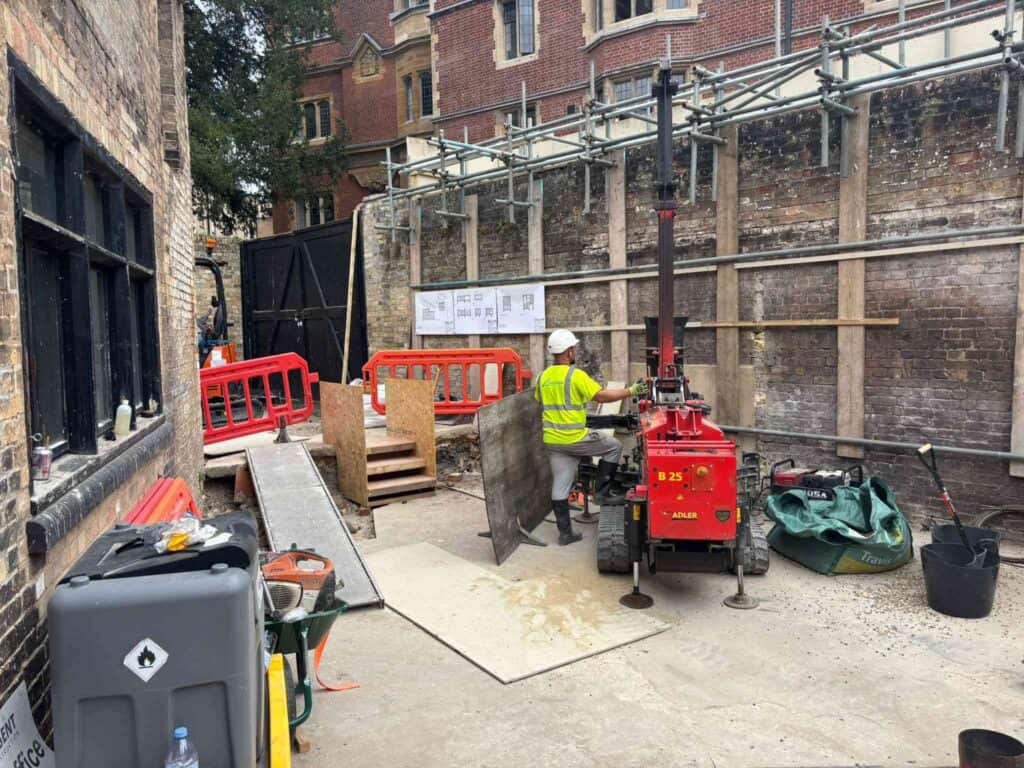
Soil improvement techniques are fundamental to modern construction because no structure can perform safely without a stable and well‑prepared foundation. Before engineers begin designing or building, the existing soil must be examined to determine whether it can withstand structural loads. When natural soil conditions are weak, loose, saturated, or prone to excessive settlement, soil improvement becomes necessary. These methods enhance soil strength, reduce compressibility, minimise settlement, and make land suitable for long‑term construction. Using the right technique ensures safety, durability, and cost‑efficiency for residential, commercial, and industrial projects.
Table of Contents
ToggleWhat are Soil Improvement Techniques?
Soil improvement techniques are specialised engineering processes designed to enhance soil’s physical and mechanical properties. They are used to increase bearing capacity, reduce permeability, control settlement, and stabilise ground conditions. Different methods are selected depending on soil type, project requirements, environmental considerations, and budget. Below are some widely used techniques applied in construction projects across various soil conditions.
Grouting
Grouting is one of the most reliable and versatile soil improvement techniques. A mixture of water, cement, sand, or chemical grout is injected under high pressure into the ground. This fills voids, fractures, and weak zones, transforming loose soil into a denser and more stable mass. Grouting is commonly used in areas with fractured rock formations, loose sands, or underground cavities. It not only reduces permeability but also increases shear strength, making it suitable for tunnels, foundations, dams, and deep excavations.
Compaction
Compaction enhances soil stability by reducing the air voids between particles and increasing density. This is achieved by applying mechanical energy using rollers, rammers, vibratory plates, or heavy tampers. Dynamic compaction involves dropping large weights from significant heights to compact deep layers of soil, while vibratory compaction works best for granular or loose soils. Proper compaction improves load‑bearing capacity, reduces future settlement, and ensures the soil can support foundations, pavements, and embankments.
Stone Columns
Stone columns, also known as granular piles, are constructed by installing vertical columns of crushed stone or gravel into the soil. The process increases stiffness, reduces settlement, and allows the ground to carry heavier structural loads. Stone columns also help reduce the risk of soil liquefaction in earthquake‑prone areas. They are widely used under roads, warehouses, embankments, and buildings built on soft or compressible soils.
Wick Drains
Wick drains are prefabricated vertical drainage channels used to accelerate the consolidation of soft, saturated, or clay-rich soils. When combined with surcharge loading, wick drains shorten the distance water must travel to escape the soil. This speeds up settlement, strengthens the soil, and significantly shortens construction timelines. The technique is essential for large-scale land development, road building, and projects requiring deep ground improvement.
Geosynthetics
Geosynthetics include geotextiles, geogrids, geonets, and geomembranes. These materials are engineered to reinforce soil, provide drainage, offer filtration, and control erosion. Geotextiles act as separation layers and allow controlled water flow, while geogrids provide tensile strength to support loads and stabilise slopes. Geomembranes create impermeable barriers ideal for reservoirs, ponds, and landfill projects. The use of geosynthetics improves soil structure without requiring extensive excavation, making them cost-effective and environmentally friendly.
Pre-Loading
Pre-loading involves placing temporary fill material, such as soil, sand, or water, on the construction site to accelerate settlement before construction begins. This controlled loading compresses the soil and forces excess water out of its pores. Once the settlement stabilises, the surcharge is removed, leaving the soil denser, stronger, and better able to support structural loads. This technique is commonly used for large platforms, industrial facilities, and road embankments built on soft clays.
Thermostatic Soil Improvement
Thermal stabilisation involves either heating or freezing the soil to change its properties. Ground freezing is the more widely used technique, in which chilled brine or liquid nitrogen is circulated to freeze soil water, forming a temporary yet extremely strong mass. This approach is ideal for tunnelling, shaft excavation, and stabilising loose or water‑bearing soils. Heating, though less common, can dry out soils and improve strength in certain geological conditions.
Chemical Stabilisation
Chemical stabilisation improves weak or reactive soils by mixing them with materials such as lime, cement, fly ash, or industrial by‑products. The reactions reduce plasticity, lower permeability, and enhance long‑term durability. This technique is especially beneficial for expansive clay soils that swell and shrink due to moisture variations. Chemical stabilisation is widely used for roads, foundations, subgrade layers, and large-scale infrastructure projects.
Biopolymer Treatments
Biopolymer treatments stabilise soil using natural, eco‑friendly polymers derived from plants or microorganisms. These polymers bind soil particles, reduce erosion risks, and increase surface strength. They are particularly effective for slope protection, landscaping, and areas requiring temporary stabilisation with minimal environmental impact. As construction trends shift toward sustainability, biopolymer treatments are increasingly preferred over chemical methods.
Vibroflotation
Vibroflotation densifies loose, granular soils using a vibrating probe called a vibroflot. The probe liquefies and rearranges soil particles, allowing them to settle into a more compact arrangement. This reduces settlement, increases bearing capacity, and prepares the ground for heavy loads. Vibroflotation is widely used for ports, marine structures, highways, and large industrial projects requiring deep soil improvement.
Conclusion
Soil improvement techniques are essential for preparing land for safe, reliable construction. From mechanical methods like compaction and vibroflotation to advanced approaches such as chemical stabilisation, wick drains, and thermal treatment, each technique plays a unique role in enhancing soil performance. The method chosen depends on soil characteristics, project complexity, and engineering requirements. By understanding these techniques, builders, engineers, and property owners can ensure strong foundations, improved long‑term durability, and reduced structural risks for any construction project.