
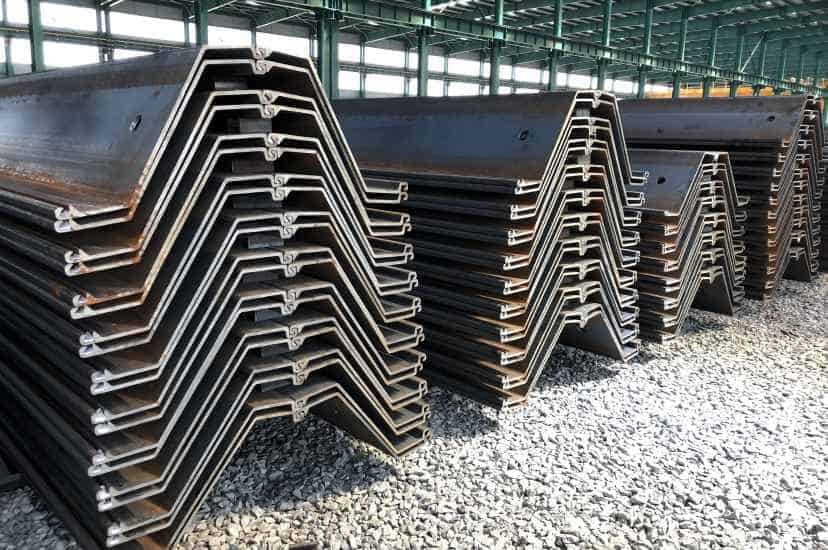
Sheet piling is installed by placing interlocking piles along a designed alignment and driving or pressing them into the ground to the required depth. The main steps include site investigation, engineering design, setting out, guide-frame installation, positioning the first pile, installing the remaining interlocking piles, checking alignment and reaching the specified embedment depth. Contractors may use vibratory hammers, impact hammers or hydraulic pressing systems, depending on ground conditions and project requirements.
Sheet piling is a widely used construction technique for creating temporary or permanent retaining structures, supporting excavations and controlling ground or water movement. It is particularly useful on projects where space is limited and conventional retaining walls would require too much room.
Unlike traditional masonry or reinforced concrete retaining walls, sheet piles are long structural sections that are driven or pressed vertically into the ground. Once installed alongside one another, their interlocking edges form a continuous wall that can retain soil and, where properly designed, help limit water ingress.
But how do you install sheet piling correctly? The answer depends on factors such as the soil conditions, pile type, excavation depth, groundwater, nearby buildings and the installation equipment available. Sheet piling should therefore be treated as an engineered construction activity rather than a simple DIY process.
This guide explains the main stages involved in sheet pile installation, the equipment commonly used, different installation methods, site preparation, safety considerations and factors that can affect the final result.
Sheet piling is installed by positioning interlocking steel, vinyl or other sheet piles along a designed alignment and driving or pressing them into the ground to the required depth. The typical process involves site investigation, setting out, preparing the guide frame, positioning the first sheet pile, installing the remaining interlocking piles, checking alignment and reaching the specified penetration depth. Depending on the ground conditions, contractors may use vibratory hammers, impact hammers or hydraulic pressing systems. The installation method should be selected by a competent contractor following the project’s engineering design and ground conditions.
Table of Contents
ToggleWhat Is Sheet Piling?
Sheet piling consists of relatively thin, elongated structural sections with interlocking edges. When multiple sheets are installed next to one another, the interlocks connect them to create a continuous wall.
Steel is one of the most common materials used for sheet piles because of its strength and durability. Other materials, including vinyl and composite products, can be appropriate for specific applications.
Sheet piling is commonly used for:
- Retaining soil
- Supporting deep excavations
- Temporary excavation support
- Cofferdams
- River and marine works
- Flood protection
- Basement construction
- Infrastructure projects
- Ground retention near roads and structures
- Quay walls and waterfront construction
The design of the sheet pile wall depends on the loads it needs to withstand, the depth of retained soil and the properties of the surrounding ground.
Why Is Sheet Piling Used?
One of the main advantages of sheet piling is that it can provide substantial ground support without requiring a wide excavation footprint.
This makes it particularly useful in urban construction, where buildings, roads, pavements and underground services may be located close to the proposed excavation.
Sheet piles can also be installed relatively quickly when the correct equipment and site conditions are available.
Another important advantage is that some sheet pile systems can be extracted and reused after temporary works have been completed.
However, the suitability of sheet piling depends on the project. Hard ground, buried obstructions, sensitive neighbouring structures or restricted access can make installation more complicated.
Step 1: Carry Out a Site Investigation
Before any sheet pile is installed, the ground needs to be properly understood.
A site investigation can provide information about:
- Soil types
- Groundwater conditions
- Soil density
- Rock layers
- Existing foundations
- Buried obstructions
- Underground services
- Ground contamination
- Nearby structures
This information helps engineers determine whether sheet piling is suitable and what installation approach is appropriate.
For example, relatively soft soils may allow piles to be installed more easily, whereas dense gravel, rock or buried concrete may create significant resistance.
Groundwater is another important consideration because excavation below the water table can introduce additional pressures and stability concerns.
Step 2: Design the Sheet Pile Wall
Sheet piling should be installed according to an appropriate structural and geotechnical design.
The design may determine:
- Sheet pile profile
- Pile length
- Required penetration depth
- Wall alignment
- Wall height
- Required steel grade
- Number of piles
- Installation method
- Need for anchors or props
- Temporary or permanent use
- Required tolerances
Engineers also need to consider the forces acting on the wall.
These can include soil pressure, groundwater pressure, surcharge loads from nearby traffic or buildings and loads created by construction activities.
For deeper excavations, a sheet pile wall may require additional support such as waler beams, struts, props or ground anchors.
Step 3: Check Underground Services
Before piling equipment arrives, the proposed installation area should be checked for underground utilities and other obstructions.
These may include:
- Gas pipes
- Water mains
- Electricity cables
- Telecommunications cables
- Drainage systems
- Existing foundations
- Buried structures
This stage is extremely important because driving a steel pile through an unidentified utility can cause serious damage and create significant safety risks.
Site drawings should be reviewed alongside appropriate surveys and physical investigation methods where required.
Step 4: Prepare the Working Area
Sheet piling equipment can be large and heavy, so the site needs to provide a suitable working platform.
The working area should be assessed for:
- Ground bearing capacity
- Plant access
- Crane access
- Storage space
- Pile delivery
- Overhead restrictions
- Proximity to buildings
- Safe exclusion zones
A stable working platform helps piling equipment operate safely and reduces the risk of plant instability.
The contractor may also establish designated areas for storing sheet piles before installation.
Step 5: Set Out the Sheet Pile Alignment
Accurate setting out is essential.
Surveyors establish the position of the proposed wall using the project drawings. The alignment needs to account for the designed wall location, corners, changes in direction and any required offsets.
A guide frame or guide beam can then be installed to help maintain the position of the piles during installation.
Without suitable guidance, sheet piles can gradually move out of alignment as installation progresses.
This can cause problems with:
- Wall straightness
- Interlock engagement
- Excavation dimensions
- Structural performance
- Connections at corners
For this reason, alignment should be checked throughout the installation process rather than only at the end.
Step 6: Position the First Sheet Pile
The first sheet pile is particularly important because it establishes the starting position for the rest of the wall.
The pile is lifted using suitable lifting equipment and positioned within the guide frame.
Before driving begins, the contractor checks:
- Position
- Verticality
- Orientation
- Alignment
- Interlock direction
The first pile should be installed carefully because errors at this stage can be carried through the entire sheet pile wall.
Step 7: Drive or Press the Sheet Pile Into the Ground
Once the pile is correctly positioned, installation can begin.
There are several methods available, and the appropriate method depends on ground conditions, pile type, project requirements and environmental constraints.
Vibratory Installation
A vibratory hammer uses rapid vibration to reduce resistance around the pile as it enters the ground.
The pile is held by the hammer and gradually driven into position.
Vibratory installation can be efficient for many soil conditions and is commonly used where relatively fast installation is required.
However, vibration can be an important consideration near sensitive buildings, structures or equipment.
Impact Hammer Installation
An impact hammer delivers repeated blows to drive the pile into the ground.
This method can provide significant driving energy and may be appropriate where greater resistance is encountered.
However, impact driving can generate higher levels of noise and vibration. The potential effects on surrounding structures should therefore be considered during planning.
Hydraulic Pressing
Hydraulic pressing equipment pushes the sheet pile into the ground rather than relying primarily on impact or vibration.
This can significantly reduce noise and ground vibration, making it useful for certain urban or sensitive projects.
The suitability of hydraulic pressing depends on site access, pile type, ground conditions and available reaction forces.
Step 8: Install the Next Interlocking Sheet Pile
After the first sheet pile has reached the required position, the next pile is placed alongside it.
Its interlock is connected to the corresponding interlock on the installed pile.
The second pile is then positioned and driven or pressed into the ground.
This process continues along the designed wall alignment.
During installation, the contractor should continuously monitor:
- Verticality
- Alignment
- Pile position
- Interlock engagement
- Installation resistance
- Final penetration
- Any movement of previously installed piles
Careful monitoring helps identify problems before they become difficult to correct.
Step 9: Monitor Verticality and Alignment
Maintaining verticality is one of the most important aspects of sheet pile installation.
A pile that begins to lean can affect the position of subsequent piles. If the deviation becomes significant, the wall may no longer match the intended design.
Surveying equipment and suitable measurement techniques can be used to check pile position.
Installers may make adjustments during the early stages of driving when there is still an opportunity to correct the pile.
Once a pile has been driven deeply into the ground, correcting a major deviation becomes considerably more difficult.
Step 10: Reach the Required Installation Depth
Sheet piles are normally designed to extend below the final excavation level by a specified amount.
This embedded section provides resistance against the forces acting on the wall.
The required depth depends on the engineering design and factors such as:
- Excavation depth
- Soil conditions
- Groundwater
- Lateral loading
- Surcharge loads
- Wall configuration
- Support arrangements
The pile should not simply be driven until it “feels deep enough”. The required penetration should be determined by the project design.
Step 11: Check the Completed Sheet Pile Wall
Once installation has been completed, the wall should be inspected and surveyed.
Checks can include:
- Wall alignment
- Verticality
- Pile top levels
- Interlock condition
- Visible damage
- Required penetration
- Connection details
- Design tolerances
Any significant deviation or damage should be assessed by the appropriate engineer before the wall is relied upon for excavation support.
Step 12: Add Structural Support Where Required
Not every sheet pile wall can stand unsupported at its full excavation height.
Depending on the design, the wall may require additional structural support.
Walers
Waler beams can distribute loads between individual sheet piles and provide a connection point for additional support.
Struts
Struts can span across an excavation and push against opposite sheet pile walls, helping resist lateral ground pressure.
Ground Anchors
Anchors can extend into the surrounding ground and provide additional restraint.
The support system must be designed specifically for the excavation and loading conditions. It should not be improvised on site.
Sheet Piling for Temporary Excavations
Sheet piling is frequently used for temporary works.
For example, a contractor may install sheet piles around an excavation to retain surrounding soil while constructing:
- Basements
- Foundations
- Underground structures
- Utility infrastructure
- Bridges
- Drainage structures
After the permanent structure is sufficiently complete, temporary sheet piles may sometimes be extracted.
However, whether piles can be removed safely depends on the design and surrounding ground conditions.
Sheet Piling for Permanent Structures
Sheet piles can also form part of permanent retaining structures.
Permanent sheet pile walls may be used for:
- Waterfront structures
- Flood defences
- Retaining walls
- Infrastructure projects
- Deep foundations
- Marine construction
Permanent installations require consideration of long-term durability, corrosion protection and environmental exposure.
The design should account for the expected service life of the structure.
What Type of Sheet Pile Is Best?
There is no single sheet pile that is suitable for every project.
Steel Sheet Piles
Steel is widely used because it offers high strength and can withstand substantial structural loads.
Vinyl Sheet Piles
Vinyl can be useful in certain lighter-duty applications and environments where corrosion resistance is important.
Composite Sheet Piles
Composite products may provide useful properties for specific retaining or environmental applications.
The choice should be based on engineering requirements rather than simply selecting the cheapest material.
What Can Make Sheet Pile Installation Difficult?
Ground conditions can have a major influence on installation.
Hard Ground
Dense soil, gravel and rock can significantly increase driving resistance.
Buried Obstructions
Concrete foundations, old walls, steelwork and other buried materials can obstruct installation.
Groundwater
High groundwater levels can affect excavation stability and the forces acting on the wall.
Restricted Access
Urban sites may have limited room for cranes, piling rigs and material storage.
Nearby Buildings
Vibration and ground movement may need to be carefully controlled where buildings are close to the piling operation.
How Long Does Sheet Piling Take to Install?
There is no standard installation time.
The duration depends on:
- Number of piles
- Pile length
- Soil conditions
- Pile profile
- Installation method
- Site access
- Weather
- Obstructions
- Equipment
- Required installation depth
A relatively straightforward project may progress quickly, while a complex urban project can take considerably longer.
It is therefore better to establish the programme after reviewing the site and installation requirements rather than relying on a general timeframe.
How Much Does Sheet Piling Cost?
The cost of sheet piling varies significantly between projects.
Factors affecting the overall price include:
- Type of sheet pile
- Steel weight
- Pile length
- Number of piles
- Installation depth
- Ground conditions
- Plant requirements
- Labour
- Transport
- Site access
- Temporary works design
- Extraction requirements
- Additional support systems
The installation method can also influence the cost.
A professional contractor should assess the project requirements before providing a meaningful quotation.
Safety Considerations When Installing Sheet Piles
Sheet piling involves heavy machinery, suspended loads, excavation hazards and potentially significant ground movement. It should therefore be undertaken by suitably competent professionals.
Important safety considerations include:
- Establishing an exclusion zone
- Inspecting lifting equipment
- Maintaining a suitable working platform
- Checking underground services
- Following lifting plans
- Keeping personnel away from suspended loads
- Monitoring piling operations
- Controlling access to the work area
- Assessing vibration and noise
- Inspecting temporary works
- Following the project’s method statement and risk assessment
Never attempt to install structural sheet piles using improvised lifting or driving equipment.
Environmental Considerations
Piling can affect the surrounding environment through noise, vibration and ground disturbance.
Where projects are located near homes, hospitals, offices or sensitive structures, contractors may need to consider alternative installation methods.
Hydraulic pressing can sometimes provide a lower-vibration alternative to traditional impact driving.
The project may also need controls for:
- Noise
- Vibration
- Dust
- Mud
- Water discharge
- Construction traffic
Environmental requirements should be established during project planning rather than after piling has begun.
Can Sheet Piles Be Reused?
One advantage of some temporary steel sheet piling systems is that the piles can potentially be extracted and reused.
Extraction is generally carried out using suitable piling equipment.
However, the feasibility of reuse depends on:
- Condition of the piles
- Degree of deformation
- Corrosion
- Interlock condition
- Extraction method
- Previous installation conditions
Piles should be inspected before being considered for another project.
Common Sheet Piling Installation Mistakes
Several mistakes can cause problems during installation.
Poor Setting Out
An inaccurate starting position can lead to a wall that gradually moves away from the intended alignment.
Ignoring Ground Conditions
Using an unsuitable installation method can lead to excessive vibration, equipment problems or difficulty achieving the required penetration.
Failing to Monitor Verticality
Small deviations can become more significant as installation continues.
Using Incorrect Equipment
The piling equipment must be appropriate for the pile profile and ground conditions.
Ignoring Nearby Structures
Vibration and ground movement can affect neighbouring buildings and infrastructure.
Treating Design as Optional
Sheet piling is a structural system. Pile length, embedment and support requirements should come from an appropriate design rather than being estimated on site.
Final Thoughts
Learning how to install sheet piling involves much more than simply driving a steel sheet into the ground. A successful installation starts with proper site investigation and engineering design, followed by accurate setting out, suitable equipment selection and careful installation.
The typical process involves preparing the working area, establishing the wall alignment, positioning the first pile, installing interlocking sheets, monitoring verticality and reaching the specified depth. Depending on the project, contractors may use vibratory hammers, impact hammers or hydraulic pressing equipment.
Ground conditions, groundwater, underground services, nearby structures and environmental constraints all need to be considered before work begins.
For temporary excavations and permanent retaining structures alike, the sheet pile wall needs to perform as intended throughout its design life. That is why professional planning, competent installation and continuous monitoring are essential.
Whether the project involves a basement, foundation excavation, marine structure or retaining wall, Southern Foundations & Piling can provide specialist piling expertise to help determine the most appropriate installation method and equipment for the specific site.
How deep should sheet piles be installed?
Sheet pile depth is determined by the engineering design and ground conditions. The required embedment depends on factors such as excavation depth, soil pressure, groundwater, surcharge loads and the support system used.
What equipment is used to install sheet piles?
Common equipment includes vibratory hammers, impact hammers, hydraulic press-in systems, cranes and piling rigs. The most suitable equipment depends on the pile type, ground conditions, access and environmental requirements.
Can sheet piling be installed in hard ground?
Yes, but hard ground, dense gravel, rock and buried obstructions can make installation more difficult. A suitable installation method and specialist equipment may be required, and ground investigation should be completed beforehand.
Can sheet piles be removed after installation?
Yes, temporary sheet piles can often be extracted using suitable piling equipment once they are no longer required. Whether removal is appropriate depends on the project design, pile condition and surrounding ground conditions.
Is sheet piling suitable for residential construction?
Sheet piling can be suitable for residential projects, particularly basement excavations, foundation works and sites with limited space. However, the design and installation method should account for nearby buildings, vibration, access and local ground conditions.